Why Veterans Make Good Employees and Why More Companies Should Hire Them

When people talk about hiring veterans, too many of them treat it like charity work. It is not. Hiring veterans is a smart business decision. Veterans bring discipline, accountability, teamwork, adaptability, and mission focus into the workplace. Those are not empty phrases. Those are the kinds of traits that help organizations stay steady, solve problems, and keep moving when things get hard. That matters in government, nonprofits, small businesses, and major companies. The data supports that point. The U.S. Bureau of Labor Statistics reported a 3.0 percent unemployment rate for veterans in 2024, and in February 2026 the rate for veterans was 3.9 percent compared with 4.3 percent for nonveterans.

One of the biggest reasons veterans make strong employees is because they already understand responsibility. In the military, showing up late, missing details, or failing to communicate can have real consequences. That mindset does not just disappear when the uniform comes off. Veterans are used to working as part of a team, operating under pressure, and figuring things out without needing constant hand holding. They also tend to bring leadership, resilience, and follow through into civilian roles. That matters in any workplace that says it wants dependable people who can adapt and perform. The VA continues to highlight leadership, teamwork, resilience, and mission focus as key strengths veterans bring into the workforce.
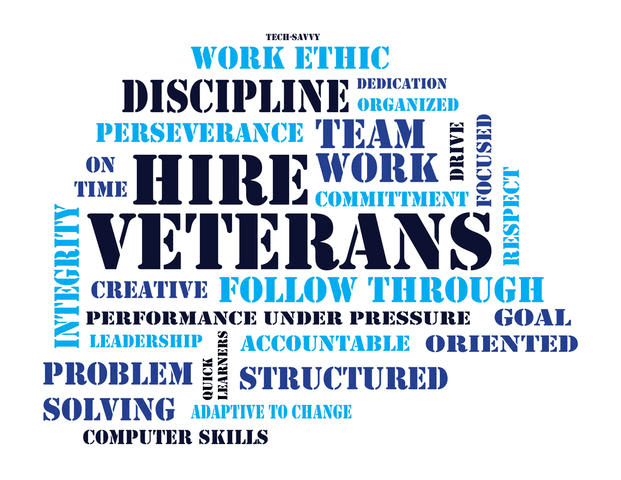
Credit: Military.com Network.

Another thing employers still get wrong is assuming veterans only fit certain jobs. That is outdated. Veterans work in operations, logistics, administration, healthcare, information technology, project management, public service, and leadership positions across the board. What they often bring is the ability to learn fast, adjust to change, and stay calm when things are not going according to plan. That is one reason Nevada should continue pushing veteran employment in a serious way. The State of Nevada has an actual veteran hiring preference process, and the Nevada Division of Human Resource Management states that veteran related preferences are applied by recruiters when proper documentation is provided. The state also runs a veteran hiring program to help veterans navigate state employment opportunities. You can read more through the State of Nevada Veteran Hiring Preference page and the State Veteran Hiring Program.

Companies should also understand that hiring veterans is not just good for the individual veteran. It can improve the culture of the organization. Veterans often strengthen standards, reliability, and trust inside a team. They know how to work with people from different backgrounds, respect the chain of command, and stay focused on the mission without always needing recognition. That does not mean every veteran is the same, and it does not mean every transition is easy. But it does mean companies should stop overlooking a talent pool that has already been tested in real environments. If employers say they want people who can lead, follow through, and perform under pressure, then they should be taking veteran hiring a lot more seriously. Nevada’s own employment resources and NDVS employment pages make that point clearly and encourage veterans to pursue state service.

At the end of the day, veterans do not need special treatment. They need fair consideration and a real opportunity. If you are an employer, take a hard look at your hiring practices and ask whether you are actually making space for veteran talent or just saying the right things. If you are in Nevada, learn how veteran hiring preference works and make sure qualified veterans are not being overlooked. If you are a veteran, do not undersell what you bring to the table. Your experience matters. Your leadership matters. Your ability to adapt, serve, and get the job done matters.

Call to action: If you are an employer, review your hiring practices and make a real effort to recruit veterans. Also, look into the NDVS Patriot Employer Program to show that commitment in a meaningful way. If you are a veteran in Nevada, check out the State of Nevada jobs site and the NDVS employment resources, then share this post with someone who needs to hear it.
Credit: Nevada Department of Veterans Services
Why Veteran Organizations Still Matter More Than Ever

A lot of veterans get out, move on with life, and never think much about joining organizations like the VFW, DAV, American Legion, Vietnam Veterans of America, AMVETS, Paralyzed Veterans of America, Iraq and Afghanistan Veterans of America, and others. I think that is a mistake. These organizations were built because veterans learned a long time ago that if we do not stay organized, connected, and engaged, our issues get pushed aside. Many of them have deep roots going back to after major wars, and they were created to fight for benefits, build community, support families, and make sure veterans still had a voice after taking the uniform off.

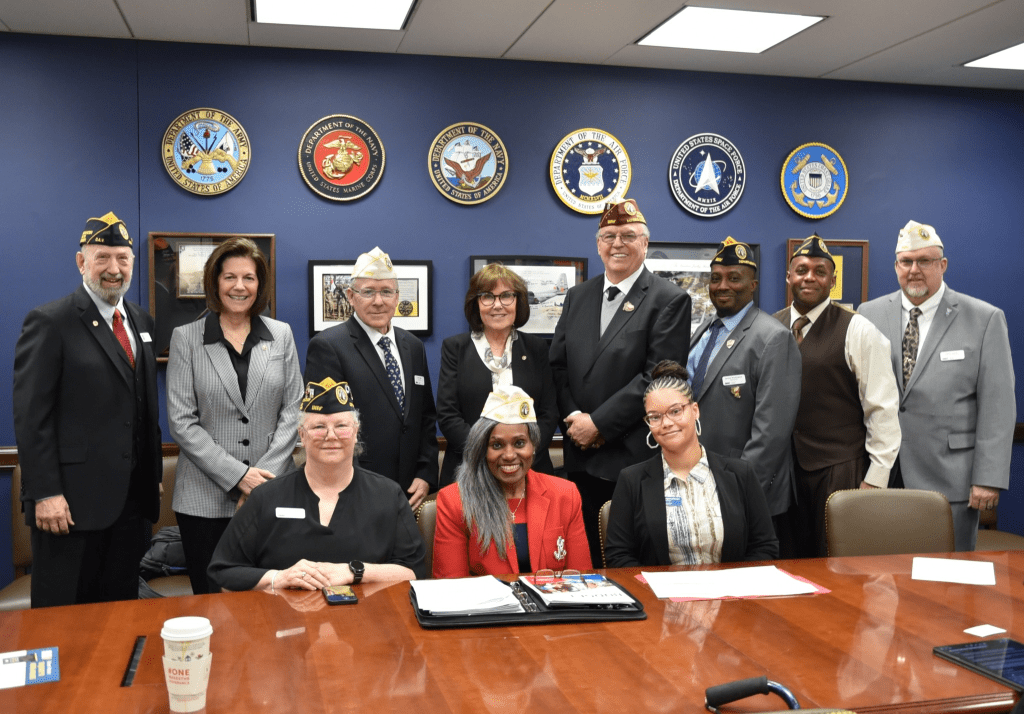
Credit: DAV Chapter #1 Reno. “Senator Catherine Cortez Masto and Senator Jacky Rosen met with Nevada DAV members to hear their stories and discuss bipartisan support for veterans to ensure all veterans get the benefits and resources they earned.

That history still matters today, but so does the current mission. In today’s climate, veterans are dealing with benefit delays, mental health struggles, rising costs, isolation, transition problems, and too many people trying to profit off veterans who just need honest help. Organizations like the VFW and American Legion continue to use their size and structure to advocate on Capitol Hill and in local communities. DAV remains heavily focused on helping disabled veterans and their families access earned benefits and live with dignity, while VVA continues broader veteran advocacy and fellowship, especially for Vietnam era veterans. AMVETS serves veterans more broadly, PVA focuses on veterans with spinal cord injuries, diseases, and disability access, and IAVA has built its identity around post 9/11 veterans and policy engagement.

What I think people miss is that these groups are not just social clubs from a different generation. At their best, they are force multipliers. They create local posts, chapters, and networks where veterans can find people who understand the job, the transition, and the long game of advocacy. They also help preserve a culture of service. Some focus more on claims and benefits help, some focus more on legislative advocacy, some focus on family support, and some focus on community service or specific eras of service, but all of them give veterans a way to stay connected to something bigger than themselves.

Joining is usually straightforward, but eligibility depends on the organization. The VFW generally requires qualifying overseas or combat related service. The American Legion and AMVETS have broader eligibility tied to honorable service, with AMVETS also open to current service members. DAV is centered on injured and ill veterans, VVA is for those who served during the Vietnam era, PVA is for eligible veterans with spinal cord injury or disease, and IAVA invites post 9/11 veterans to join its movement and advocacy efforts. The point is not that every veteran has to join every group. The point is that veterans should find the one that fits their service, their needs, and the kind of impact they want to make.

Call to action: If you are a veteran and you have never joined one of these organizations, now is a good time to reconsider that. Strong veteran communities do not build themselves. They are built by veterans who stay involved, show up, help the next person, and protect what was earned for the generation behind them. Look into the VFW, DAV, VVA, American Legion, AMVETS, PVA, IAVA, MOPH, and other credible veteran organizations in your area. Join one, attend a meeting, ask questions, and get back in the fight in a different way.

What Nevada Veterans Need to Know About Liberty Dogs in South Reno

Nevada veterans should be paying attention to what Liberty Dogs is building in South Reno. This is not a small local effort. Liberty Dogs is developing a new national service dog training and placement campus at 10639 Professional Circle, Reno, Nevada 89521, and the organization says it is scheduled to open to veterans in Summer 2026. The campus is designed to be an all inclusive facility with specialized training space, dog housing, administrative and multipurpose buildings, onsite accommodations for veterans during training, a veterinary clinic, and breeding and whelping facilities. Liberty Dogs says veterans in the program will spend two weeks living and training on campus with their matched service dog, and those services will be provided at no cost to participants.

What stands out to me is that this is being built as a full system, not just a dog placement program. Liberty Dogs is a flagship initiative of the Dave & Cheryl Duffield Foundation, and the organization says its service dogs are being trained specifically for U.S. military veterans diagnosed with PTSD. Right now, the official service dog application process is not open yet, because Liberty Dogs is still preparing dogs for its first cohort of veteran participants. Veterans who want to be considered can sign up through the “Notify Me” option on the Liberty Dogs website so they can be contacted when the application process opens. The current eligibility standard posted online is that applicants should be U.S. veterans with a VA diagnosed, service connected PTSD condition, and the screening process will include background checks, coordination with mental health providers, and an in person skills assessment.

Liberty Dogs is also already running a separate Warrior Wellness Program for veterans in Reno and Las Vegas. This is a 3 day, in person workshop based program built around resilience, neuroscience, mindfulness, peer support, physical wellness, and an introductory dog training module. It is offered at no cost for eligible veterans, and they list the training dates in Reno and Las Vegas throughout 2026. Veterans can register now through the Register Here link on the Liberty Dogs wellness page. One thing Liberty Dogs is very clear about, and veterans should understand up front, is that this wellness program is not the same thing as the future service dog placement process. Participating in the wellness workshop does not guarantee acceptance into the Liberty Service Dog Training and Placement Program launching later in 2026.

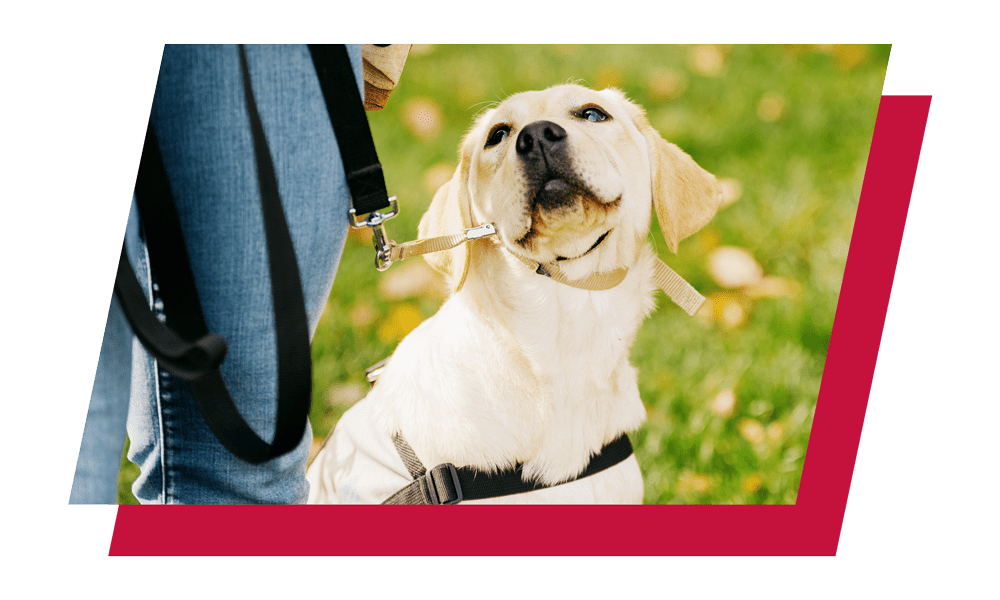
Photo courtesy of Liberty Dogs, used to highlight the organization’s new South Reno campus and veteran service dog program.

Another strong part of this program is that there are already several ways for the community to get involved before the veteran placement side fully opens. Liberty Dogs’ Puppy Raising Program allows volunteers to raise a puppy for about 14 to 16 months while helping prepare it for advanced training. No prior training experience is required, puppy raisers attend weekly or biweekly classes with professional trainers, and that all puppy related expenses and veterinary care are covered. Volunteers also help socialize the puppy by exposing it to different settings, people, noise, and daily routines.

Liberty Dogs also offers a Shelter Foster Program and a Guardian Home Program, and both are worth a look for people who want to support the mission in a hands on way. The Shelter Foster Program is a way to give a shelter dog a second chance while the professional team manages training, guidance, supplies, and costs. The Guardian Home Program is a longer commitment for specially selected breeding candidates. Liberty Dogs says guardian homes provide a stable family environment while the organization retains ownership, covers care costs, and keeps the dog in the program. Females typically remain in the program for up to 4 years and males for up to 7 years, and once the breeding career is complete, the guardian home may have the opportunity to adopt the dog permanently.

Leadership matters too. Liberty Dogs is now led by Major General Ondra L. Berry, Air National Guard, Ret., Chief Executive Officer. In my opinion, that is important because programs like this need more than good intentions. They need leadership, structure, and credibility if they are going to deliver at a high level for veterans over the long term. Liberty Dogs is clearly trying to build something significant in South Reno, and for Nevada veterans, this looks like a program worth following closely as it gets closer to opening.

Call to Action: If you are a Nevada veteran who thinks this could be a fit, or if you want to support the mission as a volunteer, now is the time to get familiar with the program. Visit the Liberty Dogs website, sign up for notifications, look at the Warrior Wellness dates, and consider whether the Puppy Raising, Shelter Foster, or Guardian Home programs are right for you. Share this post with a Nevada veteran or family member who needs to know this resource is coming to South Reno.

Additional Resources:

Real Change for Nevada Veterans Takes More Than Good Intentions

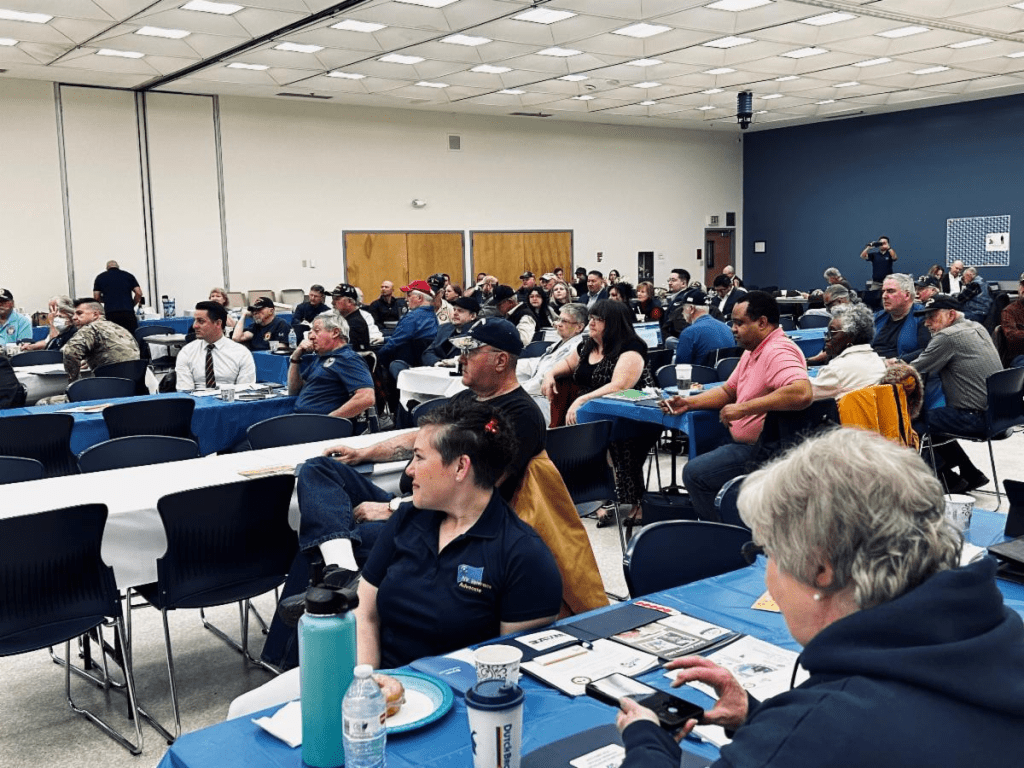
“NDVS legislative symposia bring veterans, advocates, and community leaders together to help shape priorities for Nevada’s veteran community.” Credit: Photo courtesy of the Nevada Department of Veterans Services.

Creating real change for veterans in Nevada takes more than good intentions. It takes the right people coming together, being honest about what is working and what is not, and staying committed to actual solutions. Nevada has veterans in large urban areas, rural communities, and frontier counties, and the needs are not the same across the state. Because of that, we cannot expect one program, one agency, or one organization to solve everything on its own. If we want better outcomes for veterans and their families, we need stronger coordination, better communication, and more shared purpose.

That is why these symposiums matter. They are not just another meeting or networking event. They create a structured space for veteran advocates, service providers, community leaders, and stakeholders to come together and identify the issues that matter most. Just as important, they give people a chance to move beyond discussion and actually prioritize solutions. When participants vote on the top issues, it helps bring focus to the conversation and makes it clear where there is shared concern across the veteran community. That process matters because it turns a room full of ideas into a group of priorities that people can rally around.

That is where real change starts to take shape. The symposiums help surface the issues veterans and the people serving them are seeing in real time, whether that is access to benefits, housing, mental health, transportation, employment, or other barriers. From there, the voting process helps identify which concerns rise to the top as the strongest priorities. Those priorities do not just stay on paper. They help guide future planning, strengthen collaboration between organizations, and can help drive the conversations that lead into the next legislative session. In other words, these symposiums help connect what is happening at the community level to what needs to happen at the policy level. That is what makes them important. They are one of the ways Nevada can move from hearing concerns to building momentum around meaningful change.

At the end of the day, progress for veterans will come from people who are willing to work together, listen closely, and stay focused on the bigger mission. These symposiums help create that alignment. They bring the right people into the same room, allow priorities to be identified through a shared process, and help lay the groundwork for future action.

Call to action: If you care about improving support for Nevada veterans, stay engaged in these conversations, share this post, and leave a comment with one issue you believe should be a top priority for the next legislative session. Take a look at NDVS’s upcoming Legislative Symposia in 2026 Here: Spring 2026 Symposia

Useful Resources:

NDVS and the United Veterans Legislative Council → the UVLC page: https://veterans.nv.gov/about-the-united-veterans-legislative-council/

2024 Veterans Legislative Symposia Report → the report PDF: https://veterans.nv.gov/wp-content/uploads/2024/07/2024-NV-Veterans-Legislative-Symposia-FINAL.pdf

Nevada Legislature → Nevada Legislature page: https://www.leg.state.nv.us/

2026 Veterans Legislative Symposia → the symposium page:
2026 Veterans Legislative Symposia

NDVS Future Symposiums:

Elko Veterans Legislative Symposium
Thursday, March 26, 2026
4:00 p.m. to 7:00 p.m.
VFW Post 2350, 646 VFW Drive, Elko, NV 89801

Reno Veterans Legislative Symposium
Saturday, March 28, 2026
8:00 a.m. coffee and donuts, event runs 8:30 a.m. to 11:30 a.m.
Truckee Meadows Community College, Red Mountain Building, Room 100, 7000 Dandini Blvd., Reno, NV 89512

Las Vegas Veterans Legislative Symposium
Saturday, April 18, 2026
8:00 a.m. networking, event runs 8:30 a.m. to 11:30 a.m.
VA Southern Nevada Auditorium, 6900 N Pecos Rd, North Las Vegas, NV 89086

Why a Nevada Veteran License Plate Matters

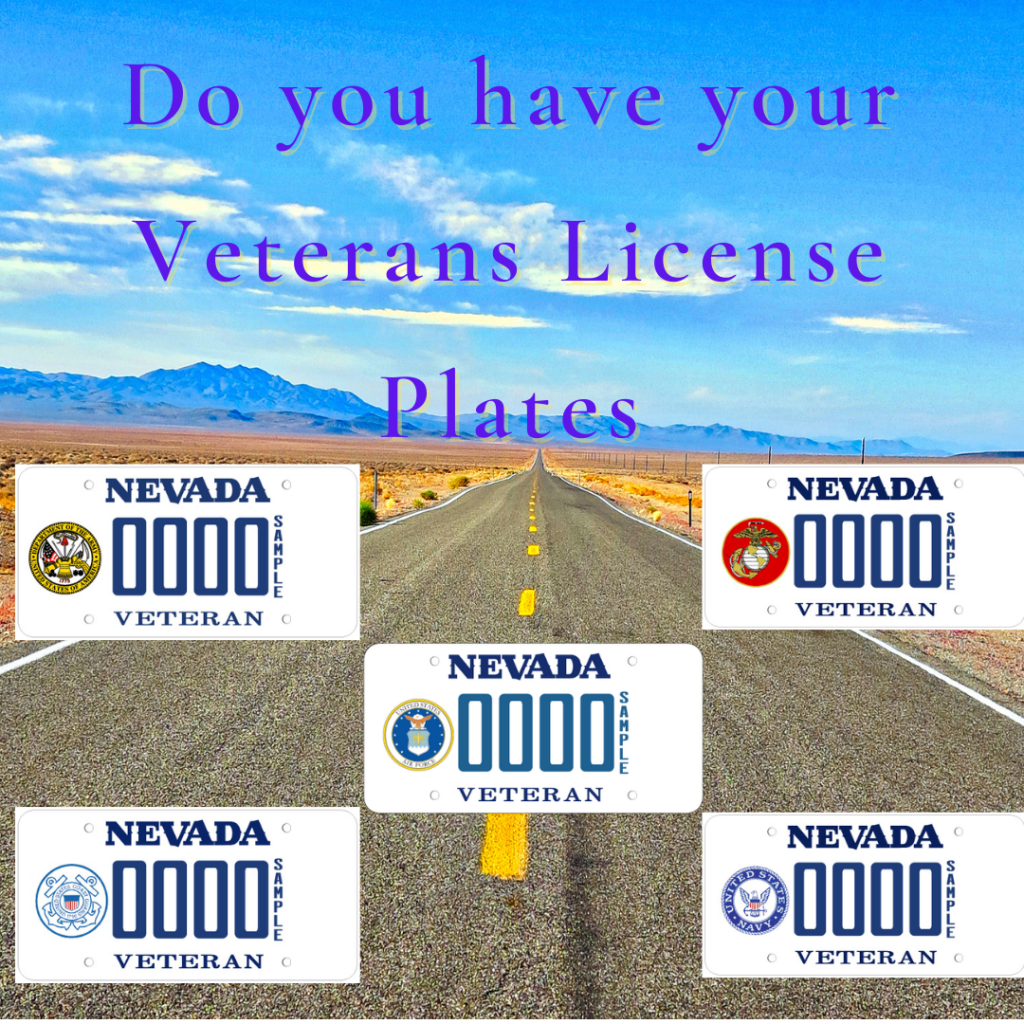
A Nevada veteran license plate is more than just something that looks good on your vehicle. It is a simple way to show pride in your service or your family’s connection to service, while also helping support veterans across our state. On the Nevada DMV Veteran License Plates page, veteran plates are available for veterans, their families, and active duty members of the Nevada National Guard, and any veteran or their spouse, parent, or child may purchase a veteran license plate.

A Nevada veteran license plate is more than a symbol of service. It is also one more way to support veterans and their families across our state.” Credit: NDVS

What makes these plates even more meaningful is where part of the money goes. The Nevada DMV explains that $25 of the initial fee and $20 of the annual renewal supports outreach programs and services for veterans and their families administered by the Nevada Department of Veterans Services. NDVS also explains that these fees help provide community outreach and service support to veterans in Nevada. That means when someone chooses a veteran plate, they are not just recognizing military service, they are helping support work that reaches veterans and families in real ways.

I think that matters because sometimes people want to help veterans, but they are not always sure how. This is one of those easy, practical ways to do it. A veteran plate shows pride, starts conversations, and helps support services for veterans and their families here in Nevada. It is a small choice, but it can still make a difference. And when more people understand that these plates help support veterans, it becomes more than just a specialty plate. It becomes one more way to give back. The DMV says these plates must be ordered in person at a DMV office, so it is a good idea to review the plate options and requirements before you go.

At the end of the day, Nevada veterans deserve support that is visible, practical, and community driven. Something as simple as a license plate may not seem like much at first, but it is one more way to stand behind those who served.

Call to Action: If you are eligible for a Nevada veteran plate, consider getting one the next time you register or renew your vehicle. And even if you are not, share this post so more people understand that choosing a veteran plate is one more way to support Nevada veterans and their families.

Transitioning Home: What Nevada Veterans Should Do in the First Year After Service

The first year after leaving the military is a big one. For a lot of veterans, it is exciting, but it can also be stressful, confusing, and full of unknowns. You are trying to figure out work, school, healthcare, benefits, and what life is going to look like moving forward. My biggest advice is simple: do not wait. Start getting connected early. If you still have 180 to 90 days left before separation, look into filing a Benefits Delivery at Discharge (BDD) claim, because VA says that can help speed up the disability claims process and get your benefits moving sooner. If you are coming home to Nevada, Nevada Veterans Service Officers are a great places to start. Ask a VSO here!

One of the first things veterans should do is get squared away on healthcare and benefits. If you are eligible, get enrolled in VA health care and sit down with an accredited VSO who can help you understand what you may qualify for and how to file the right way. This is also the time to learn about Nevada specific benefits that people often overlook. NDVS says many Nevada veterans and surviving spouses may qualify for a veterans tax exemption that can be applied to property taxes or vehicle governmental service tax, but it is not automatic, so veterans need to contact their County Assessor’s office to determine eligibility and apply it the right way.

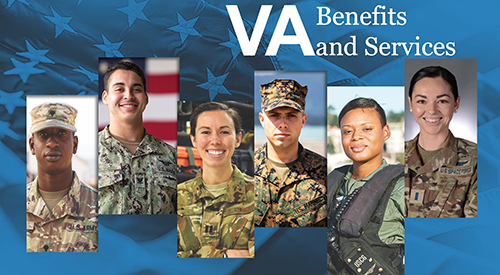
The transition home starts with getting connected to the benefits and services you earned through your service.” Credit: Your Transition Assistance Program – VA

The next big step is having a real plan for school, training, or work. A lot of veterans have earned benefits like the GI Bill , but not everyone takes the time to use them in a way that supports long term goals. GI Bill benefits can help pay for school and cover expenses while training for a job, and the pre-discharge process also points veterans toward other federal benefits like VA home loan eligibility and Veteran Readiness and Employment (VR&E) when applicable. On the state side, Nevada also has education resources for veterans, including information on resident tuition rules and other education programs, and employment help through the Nevada Department of Employment, Training and Rehabilitation Veteran Services page. DETR – Veteran Services

Most importantly, do not try to do everything on your own. There is nothing weak about asking for help during transition. In fact, it is one of the smartest things you can do. The first year after service can shape a lot about what comes next, and getting connected early can help you avoid bigger problems down the road. Whether it is a BDD claim, healthcare enrollment, property tax exemptions, education benefits, employment support, or just knowing where to start, there are real resources out there for Nevada veterans and their families.

Call to Action: If you know a veteran who is transitioning out of the military, share this post with them. Encourage them to get connected early, reach out to a VSO, and take advantage of the benefits they earned through their service before opportunities get missed.

Why Nevada Needs More Accredited Veterans Service Officers

Nevada’s veterans deserve more than good intentions. They deserve real access to real help from trusted, accredited professionals who know how to guide them through the VA claims process the right way. That is exactly what Veterans Service Officers do. VSOs help veterans and their families access earned benefits by preparing, filing, and tracking VA claims, assisting with appeals, and connecting them to the right resources along the way. NDVS VSOs

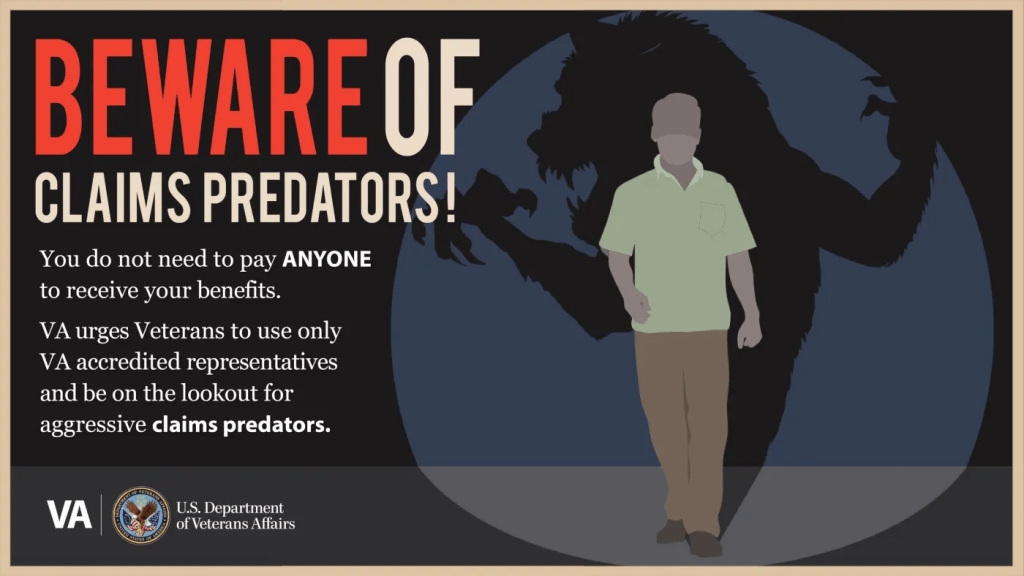
The problem is simple. There are too many veterans who need help, and not enough accredited VSOs across the state to meet that need the way we should. When veterans cannot get timely access to a trusted VSO, some of them may end up turning to the wrong people out of frustration, confusion, or desperation. That is where claim predators come in. VA has warned veterans to stay away from unaccredited individuals and companies that try to profit off disability claims, and VA makes clear that accredited representatives are the right and trusted path.

Nevada veterans can get free help from accredited VSOs and should never have to pay claim sharks to access earned benefits.” Credit: Beware: Claims predators want to prey on your benefits

This matters because accredited help is not just better, it is how the system is supposed to work. VA states that accredited VSO representatives can help gather evidence, file claims, request decision reviews, and communicate with VA on a veteran’s behalf, and those services are FREE. VA also states that without accreditation, a person may not independently assist claimants in the preparation, presentation, and prosecution of VA benefit claims. That means when we invest in more VSOs, we are not just expanding staffing. We are expanding lawful, ethical, no cost access to benefits assistance for Nevada’s veterans and families.

If Nevada is serious about serving its heroes, then we need to fund more Veterans Service Officers across this state. We need more accredited help in our communities, more access for rural veterans, more support for families, and fewer opportunities for claim predators to take advantage of people who have already sacrificed enough. Our veterans earned these benefits through service, and they deserve the chance to access them the right way.

Call to Action: if you believe in that mission, speak up. Share this post, talk to your local leaders, and urge community partners and legislators to fund more VSOs across Nevada. Our veterans deserve it.

Peace of Mind for Nevada’s Veterans: State Cemeteries and Veterans Homes

Nevada takes care of its veterans in more ways than most people realize, and two of the biggest examples are NDVS’s state veterans cemeteries and state veterans homes. These are not just facilities, they are long term promises of dignity, honor, care, and peace of mind for veterans and their families. When families know there is a trusted place for final honors, and a trusted place for skilled long term care if life requires it, it removes a lot of uncertainty. That is why I think these resources deserve more attention, because they are part of how Nevada truly “shows up” for its heroes.

Nevada operates two state veterans cemeteries, one in Fernley and one in Boulder City, and both exist to ensure veterans receive a respectful, permanent resting place and earned military honors. These cemeteries also support families through a difficult time by providing structure, guidance, and a clear process when things feel overwhelming. Just as important, NDVS offers pre registration, which lets eligibility be determined ahead of time, so families are not scrambling later. If you want to learn more or pre register, start here: Northern Nevada Veterans Memorial Cemetery (Fernley) https://veterans.nv.gov/benefits-and-services/northern-nevada-veterans-memorial-cemetery/ and the Online Cemetery Registration Form https://veterans.nv.gov/online-cemetery-registration-form/.

On the care side, NDVS also operates two state veterans homes, which provide skilled nursing and supportive services for eligible veterans (and in some cases eligible family members), with the goal of quality of life, safety, and dignity. In Northern Nevada, the Northern Nevada State Veterans Home in Sparks offers skilled nursing and rehabilitation in a setting designed to feel like home, not an institution. In Southern Nevada, the Southern Nevada State Veterans Home in Boulder City provides skilled nursing, programs, and specialized care options, including support for residents with Alzheimer’s and dementia needs. You can read more about each here: Northern Nevada State Veterans Home (Sparks) https://veterans.nv.gov/benefits-and-services/northern-nevada-state-veterans-home-sparks-nv/ and Southern Nevada State Veterans Home (Boulder City) https://veterans.nv.gov/benefits-and-services/southern-nevada-state-veterans-home-boulder-city-nv/.

What I appreciate most about these resources is the peace of mind they create. Families do not have to guess where to turn, and veterans do not have to wonder if they will be cared for with respect when they need help the most. These services also reinforce something I believe strongly: veteran support is not only about benefits claims, it is about building systems that protect people across every stage of life. If you want a simple “hub” page to share with someone, NDVS lists both homes here as well: https://veterans.nv.gov/state-veterans-homes/.

Call to action: take 10 minutes this week and pre register for cemetery eligibility, then tell your spouse, adult children, or a trusted friend where you saved the confirmation and documents. Share these links with a veteran you know, because most people only learn about these resources when they are already in crisis mode. If you see a veteran, start the conversation, and help them plan with confidence instead of waiting for a hard day to force the issue.

The Future of Veteran Advocacy in Nevada Starts in Rural Communities

Nevada has a strong veteran community, but the future of veteran advocacy is going to be defined by how well we serve rural Nevada, not just our biggest population centers. In many of our rural counties, the barriers are not complicated, they are practical: long distances, limited transportation options, and fewer nearby providers. When a veteran has to drive hours for an appointment, or cannot reliably get to a clinic at all, access is not really access. That gap is exactly where advocacy matters most, because one good connection can turn confusion and isolation into a real path forward.

Rural veterans also face a resource reality that looks very different than Northern and Southern Nevada. Specialty care can be harder to find, local services can be limited, and even basic navigation can feel overwhelming when there is no nearby support network to lean on. Transportation becomes a healthcare issue, not just a logistics issue, and that is why programs that help veterans get to appointments are so important. If you are looking for starting points, NDVS has transportation resources gathered in one place, and the VA also has a broader Veterans Transportation Program overview that explains common options available. Here are two helpful references: NDVS Transportation Resources and File And Manage Travel Reimbursement Claims.

The opportunity in Nevada is that locals can help fill the rural gap in a way that is sustainable and community driven. NDVS has an incredible Nevada Veteran Advocate initiative, and NDVS is relaunching this program to strengthen how veterans are supported at the community level. When people in rural communities know how to spot needs, share accurate information, and connect veterans to the right professionals, it multiplies our reach without waiting for the perfect conditions. To learn what an NV Advocate does and why it matters, check out: Nevada Veterans Advocates (NV Advocates).

We also have a real chance to expand virtual advocacy, because the right tools can reduce travel barriers and bring support closer to home. Telehealth is a big part of that, especially for rural veterans who may not have easy access to care locally, and the VA continues to expand virtual care options. If you want to understand what is available, start here: VA Telehealth Services.

Call to action: sign up and take the NDVS NVA courses, keep an eye out for the Nevada Veteran Advocate relaunch, and stay in the loop by joining the NDVS monthly newsletter here: Sign up for the NDVS Newsletter. And if you see a veteran, start the conversation, because when armed with the right tools and resources, anyone can be an advocate for Nevada’s heroes.

Building Trust in Public Service: Leadership That Serves Veterans

Trust is the foundation of everything we do in public service, especially when the people we serve are veterans who have already learned how easy it is for systems to feel confusing, slow, or impersonal. Veterans do not judge leadership by titles or slogans. They judge it by the experience they have when they walk through the door, make the call, or submit the necessary paperwork. Did we listen, did we follow through, and did we make the process clearer or harder.

Leadership that serves veterans starts with servant leadership, because the mission has to stay bigger than ego and bigger than convenience. Serving first means removing barriers, supporting your team with clear standards and training, and holding the line on professionalism when the day gets busy and emotions run high. It also means understanding that trust is built in small moments: returning a call, explaining the next step in plain language, and being honest about timelines. Deloitte’s research on public trust breaks this down into four practical “trust signals” leaders can control: humanity, transparency, capability, and reliability.

Strategic leadership matters just as much, because good intent without alignment becomes inconsistency. Veterans should not get different answers depending on who they talk to, what office they visit, or what day of the week it is. Strategic leadership is how you build repeatable outcomes through clear priorities, shared expectations, and accountability that is fair and consistent. The federal executive framework (OPM’s Executive Core Qualifications) is a strong reference point for what senior leaders are expected to do: lead change, lead people, and drive results.

Transformational leadership is what turns “we care” into measurable improvement veterans can actually feel. Transformation is not a one time announcement, it is sustained change in behavior, process, and culture that improves clarity, timeliness, and quality of service. VA’s Veterans Experience work is a good example of how large systems tie leadership, measurement, and customer experience together at scale.

Call to action: If you work in public service, choose one trust-building action you will commit to this week for veterans: clearer communication, faster follow up, more consistent standards, or removing one barrier, and drop a comment with what you chose and why.

Two useful references:

Deloitte: Rebuilding trust in government (trust signals leaders can act on): https://www.deloitte.com/us/en/insights/industry/government-public-sector-services/building-trust-in-government.html

OPM: Executive Core Qualifications (what top public leaders are measured on): https://www.opm.gov/policy-data-oversight/senior-executive-service/executive-core-qualifications/